
How Arrest Warrants Work in Plymouth County
Iowa Code chapter 804 lays out the basic arrest-warrant process. It starts when a complaint or affidavit lays facts before a judge or magistrate. Finding probable cause, the judicial officer may issue an arrest warrant that names the accused and the alleged offense and directs a peace officer to make the arrest. Bail can be endorsed where the law allows it. In Plymouth County, the Iowa District Court is the unified trial court, handling felony, misdemeanor, traffic, scheduled-violation, county-infraction, and municipal-infraction matters through judges, district associate judges, and magistrates. No separate city arrest-warrant court exists here. The public paper trail runs through the District Court case file, while the sheriff or another authorized agency handles service.
Plymouth County Warrant Timeline
Each office in a Plymouth County warrant case plays one role. An officer or complainant supplies the facts. A judge decides probable cause. The clerk keeps the court file, and a peace officer executes the order and files the return with the court.
Complaint or Affidavit → Probable-Cause Review → Warrant Issued → Order Routed for Enforcement → Arrest and Initial Appearance → Officer’s Return Filed.
A public docket can show parts of that path without the signed warrant image. Ask the Plymouth County clerk whether the latest entry shows issuance, service, return, recall, or another event. A probable-cause finding supports process.
Arrest Warrants: What They Contain
Iowa's statutory warrant schema lists the court and county, the accused, the offense, the command to a peace officer, issuance, the judicial signature, and a bail endorsement when one applies. Execution and return add details later. Ask the Plymouth County clerk for these fields.
| Court and county | Identifies the Iowa District Court and Plymouth County file. |
|---|---|
| Case ID | Connects the warrant to the docket and clerk inquiry. |
| Accused person | Names the person to be arrested, with limited identifiers where public. |
| Alleged offense | States or incorporates the charge supporting the command. |
| Issue date and signature | Shows judicial authorization. |
| Bail endorsement | May state authorized bail, subject to exceptions and review. |
| Execution and return | Records officer action after service. |
A short public listing rarely tells the whole story. When you call the Plymouth County clerk, ask for every field on the warrant rather than trusting a summary.
Plymouth County Public Docket Limits
Iowa Courts Online can display case IDs, parties, charges, filings, docket events, dispositions, financial assessments, and some bond or status information, generally for public case material after 1998. The online display is not the official court record, though, and it may not show the arrest-warrant image. Juvenile, sealed, protected, and confidential entries stay restricted, and recent filings can take time to appear. Search by exact case or citation number when you can. Then call the Plymouth County Clerk of District Court at 712-546-4215. The clerk can explain the public entry and the correction path, but cannot give legal advice.
How Warrants Get Served in Plymouth County
The Plymouth County Sheriff's Civil Division says deputies serve arrest warrants along with court orders and other legal documents. Patrol runs around the clock. Court and administrative desks keep business hours, so a 24-hour patrol does not mean a judge or clerk is on hand at all hours to change a warrant. The sheriff's main number, 712-546-8191, is posted as a 24-hour contact. City police may serve an order routed to their agency. The clerk can identify the court record, while the sheriff or city police can answer agency-specific enforcement questions. No public page promises a walk-in surrender appointment or a dedicated warrant counter. The city and sheriff roles may overlap. Only the issuing court can recall or quash the order.
Plymouth County Agency Confirmation
Believe an arrest warrant exists? Identify the case and court first. Then ask which agency holds the order for execution. The public Plymouth County sheriff Most Wanted page is curated, not comprehensive, and city police sites offer no complete searchable warrant database.
- Search the public District Court docket with the case number or exact name.
- Call the clerk for the latest public warrant, bond, hearing, or return entry.
- Ask the sheriff whether it is the enforcing agency, or contact the city police agency named in the file.
- Use a narrow records request only when a copy is needed and time permits.
- Consult an Iowa attorney before choosing surrender, bond, appearance, or motion strategy.
Federal warrants skip the county route entirely. They run through the Northern District of Iowa and the U.S. Marshals Service, not any Plymouth County office.
Arrest Warrants, Summonses, and Bench Warrants
These court tools are not interchangeable. An arrest warrant commands custody. A summons orders a person to appear without directing an immediate arrest, and a bench warrant in Plymouth County usually answers a missed court obligation in an existing case.
| Process | Typical basis | Immediate effect |
|---|---|---|
| Arrest warrant | Complaint or affidavit plus probable cause | Authorizes arrest |
| Summons | Court directs appearance | Requires attendance without initial custody command |
| Bench warrant | Missed appearance or failure to comply | Authorizes arrest tied to the court obligation |
Iowa Code section 805.5 treats a willful citation failure-to-appear order as an arrest warrant. Plymouth County uses no separate documented capias-pro-fine process.
Plymouth County Arrest Versus Search Warrant
An arrest warrant authorizes taking a named person into custody. A search warrant under Iowa Code chapter 808 authorizes a search for described evidence at a place, person, vehicle, or property, and search-warrant applications and affidavits get special confidentiality before execution and return. That distinction is why a public case search may reveal an arrest event but not a pre-execution search-warrant affidavit. The official Rule 2.36 blank form shows general fields such as court, case number, probable-cause narrative, command, inventory, and return, without exposing a real person's data. Treat no evidence-search paperwork as an outstanding arrest list in Plymouth County.
Plymouth County Bond Questions
Iowa sets baseline bond amounts by charge class. The uniform schedule puts a Class B felony at $25,000, a Class C at $10,000, and a Class D at $5,000. An aggravated misdemeanor runs $2,000, a serious misdemeanor $1,000, and a simple misdemeanor $300. Scheduled traffic violations follow the state compendium instead. Exceptions and judicial review still control the final figure. No chart overrides a judge's order or a current warrant endorsement in Plymouth County. Before posting anything, ask about bond type, the amount, any conditions, where it can be posted, and the next appearance. Walking into a Plymouth County facility with a copied chart, or assuming a charge guarantees release at the baseline amount, is a mistake.
Plymouth County Enforcement Systems
Iowa officers confirm warrants through the IOWA System, short for Iowa On-line Warrants and Articles. Access is limited to criminal-justice users. There is no public statewide search. An officer in Plymouth County can verify an active warrant on the spot while nothing about it appears online. The official description shows that restricted statewide layer.
The image confirms why an online omission cannot prove no arrest warrant exists.
Plymouth County Citation Routing
Le Mars splits its fines by type. City parking fines stay local. Other traffic fines route to the Plymouth County Clerk of Court, and they feed the same District Court docket where an arrest warrant can follow a failure to appear. A parking balance, a license issue, and a warrant are separate records. The official Le Mars fine-routing page illustrates that split.
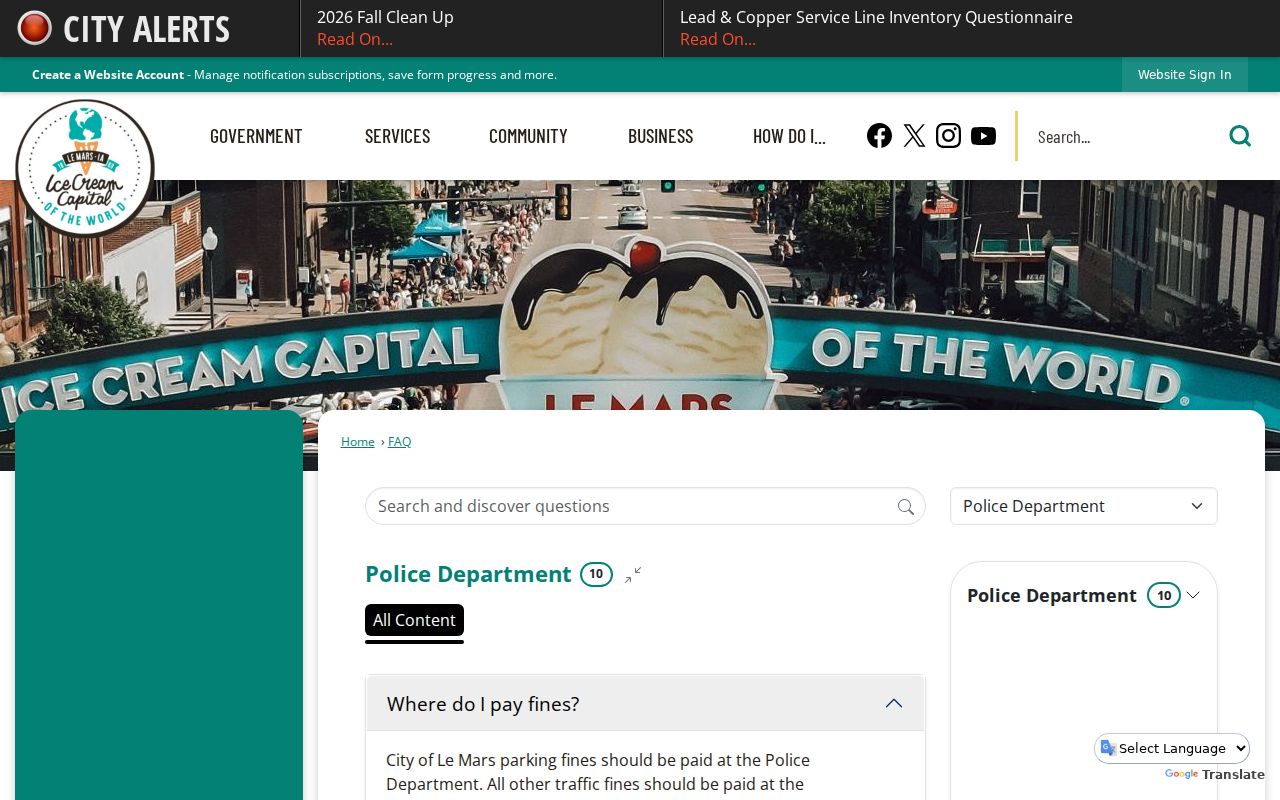
The local route supports checking the right office before drawing a warrant conclusion.
Handling an Arrest Warrant in Your Name
Call an Iowa attorney first. Then contact the issuing court. Gather identification, medications, and case papers, plus reliable transport. Ask counsel and the enforcing agency how voluntary surrender works in Plymouth County, what bond applies, when the first appearance is set, and what property may be brought. Never assume counter staff at a courthouse or sheriff facility can recall the order on the spot.
Act through official channels: A clerk records court action, a peace officer serves the warrant, and only the court can recall or quash its order.
Keep the warrant or case number, receipts, bond papers, signed orders, and the notice of your next hearing. Recheck the official docket after anything posts. The Plymouth County warrant records overview maps the broader court-to-sheriff resolution route. Scammers stay busy here. Hang up on any caller demanding gift cards, cryptocurrency, or wire transfers to stop an arrest.