
How Traffic Warrants Work in Plymouth County
Plymouth County traffic warrants grow out of a court process, not a private driving report. A citation starts the record. It lists the alleged violation, a court date or response date, and the way to pay or appear. Willfully skip that date and the court can act. Under Iowa Code chapter 805, a willful failure to appear lets the court issue an arrest warrant. The clerk routes it to the issuing agency. That agency enforces the order. People say "bench warrant," but Iowa Code section 805.5 says "arrest warrant for failure to appear." Plymouth County sits in Iowa Judicial District 3. Traffic, scheduled-violation, simple-misdemeanor, and municipal-infraction matters all run through the unified Iowa District Court. District associate judges and magistrates handle the lower-level cases. No separate Plymouth municipal or justice-court docket exists. The ticket's city may not hold the court record, so check where the case actually lives.
Plymouth County Citation Number Search
Start with the paper citation. The public Iowa Courts Online system is the search route. Its case search takes identifying case information. The payment search offers name and partial citation-number paths. Pick Plymouth County and the matching case type when those fields appear. The court guide warns that citation information can take time to show up, so a blank result is not final proof that no case or warrant exists. The official case-search screen is the doorway into Plymouth County court data; View the Iowa Courts Online case-search source before using the interface.
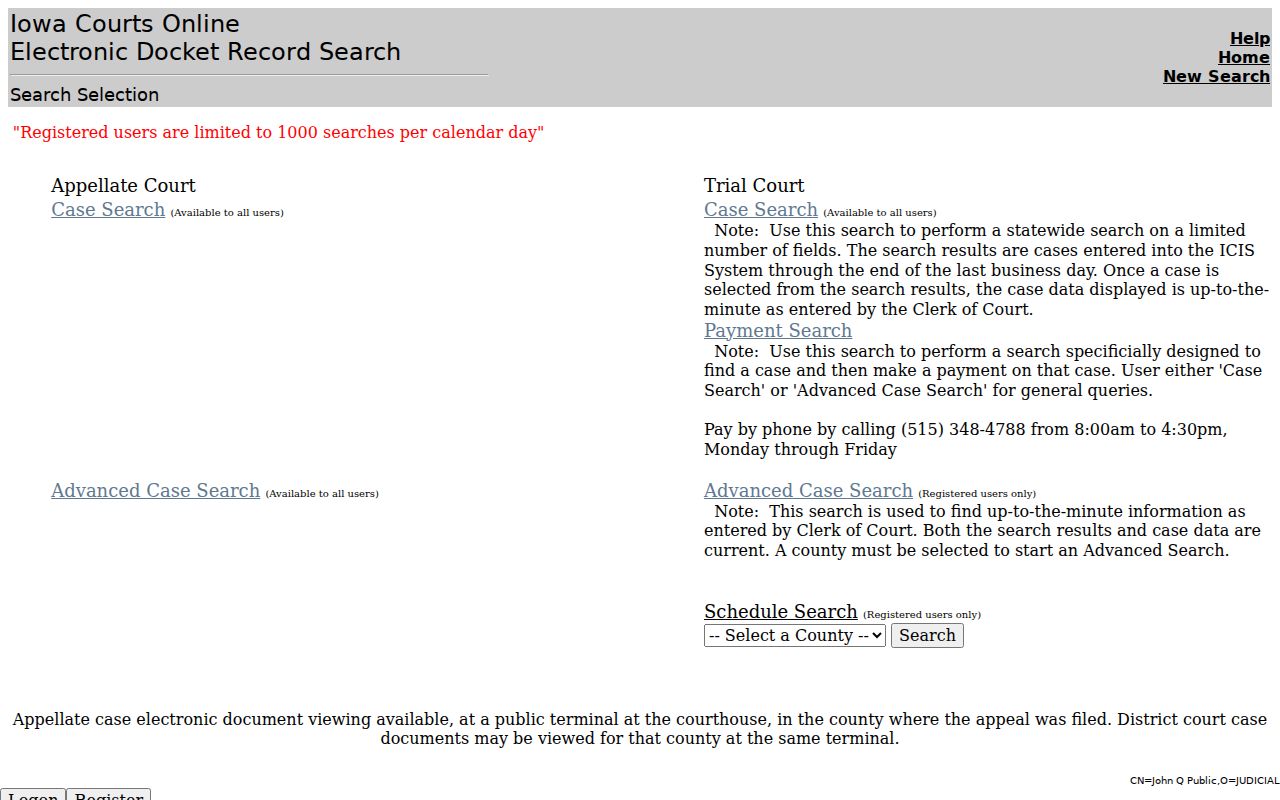
The screen is a court docket entry point. It does not promise a complete public law-enforcement warrant list. Note: Keep the citation and case ID together, since the clerk may need either one to find the right Plymouth County traffic record.
Plymouth County Traffic Warrant Checks
Use every open channel when the status is unclear. Plymouth County publishes no searchable sheriff warrant database. The restricted IOWA System serves authorized criminal-justice users only. A careful warrant check therefore starts with the public docket and ends with direct confirmation from the office involved.
- Search Iowa Courts Online by citation number, case ID, or name. Choose Plymouth County and the fitting case type where the screen asks for them.
- Use the official Pay a Fine route when the issue is a county-filed citation or court debt. A payment result is not, by itself, a warrant recall.
- Call the Plymouth County Clerk of District Court at 712-546-4215. Ask whether the docket shows an FTA or warrant and whether payment, a motion, or an appearance is required.
- For an older or unclear record, request a specific court document or inspect the public terminal at the courthouse. Identify the case, citation, document type, and date range.
- If the clerk directs you to law enforcement, call the Plymouth County Sheriff at 712-546-8191 or the cited city police department. Confirm surrender and booking details before going in person.
The sheriff also takes public-record requests by phone, mail, email, or in person through its official records channel. Keep the request narrow. The Most Wanted page is no substitute for that sequence.
Le Mars Traffic Fine Routing
Le Mars splits traffic fine payments between two offices. City parking fines go to the Le Mars Police Department, the city's fine-payment FAQ explains. Every other traffic fine goes to the Plymouth County Clerk of Court. That split is about routing only. It creates no separate city criminal court. A city receipt also does not automatically clear a Plymouth County traffic warrant. The city page spells out the difference in plain terms.
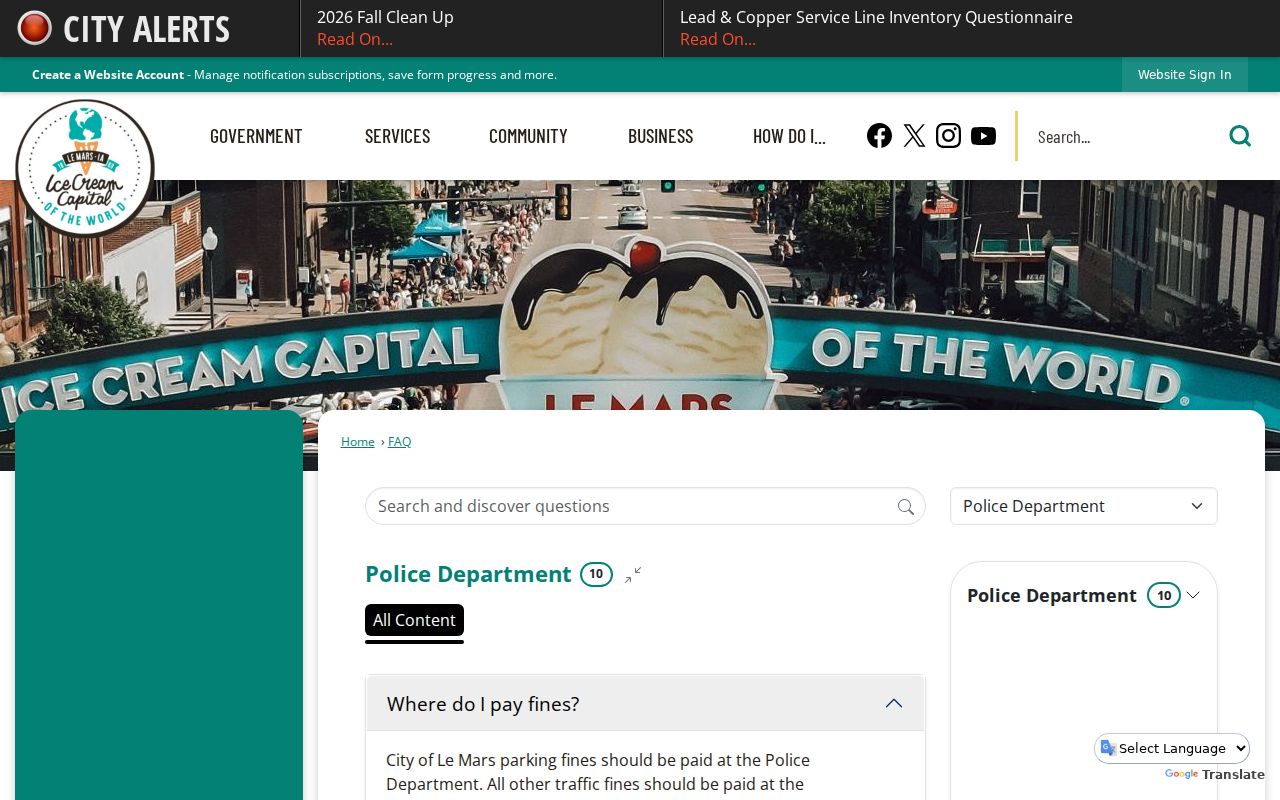
The split also explains a missing parking item. A city parking case may not appear in a Plymouth County court search, and not every citation is online. Read the paper's issuing agency and payment location before calling either office.
Traffic Warrants: What They Show
A Plymouth County traffic case spreads its facts across the citation and the docket. There is no single public warrant card. Iowa Code section 805.6 sets out what a citation must contain, and Iowa Courts Online shows the public part of the court history. Read the latest court event, not just the balance line.
| Case or Citation Number | The court case ID and citation serial number, shown here only as a neutral example: CITATION NUMBER. |
|---|---|
| Person and Offense | The cited person and alleged traffic or scheduled violation, subject to public-access and redaction rules. |
| Time and Place | The cited event location and date as recorded on the citation. |
| Court Appearance | The date, place, or response instruction that controls the next court step. |
| Payment Route | The fine or penalty instruction, which may point to the court clerk or, for Le Mars parking, city police. |
| Docket Status | Events may show FTA, warrant issuance, appearance, payment, recall, or disposition. Not every field is public online. |
Bond details may sit in a separate order. The public case summary does not promise them, and the issuing court alone can say whether a Plymouth County warrant is still active.
Plymouth County FTA Warrant Timeline
The local sequence is best read as a chain: citation issued → required court response → willful failure to appear → court-issued arrest warrant → clerk routing to the issuing agency → arrest, appearance, or court-ordered recall. Each step creates a different record. The fine, the court debt, the arrest warrant, and any later license consequence are related but not interchangeable.
A missed date should trigger a Plymouth County case search and a clerk call. Ask what the docket calls the event. Ask whether a warrant has issued and what the court wants next. Time alone does not erase the order. Paying the displayed balance may not end every court requirement. Keep proof of payment, appearance, bond, and any recall order. Note: A public docket can lag behind court action, so ask the clerk for the latest status before relying on an online event.
Clearing a Plymouth County Traffic Warrant
Start with the court that controls the case. The Plymouth County clerk can say whether the next step is payment, a payment plan, a motion, a hearing, or an appearance. Staff explain process. They cannot give personal legal advice. When an arrest risk or criminal consequence is unclear, an Iowa attorney can address the case and contact the court.
- Confirm the case number, citation, current docket event, and issuing authority with the clerk.
- Ask whether the court permits payment, requires an appearance, or must act on a motion before recall.
- Use only the official court, clerk, or named city payment route. Keep the receipt and all confirmation numbers.
- Ask when the warrant status will update and whether a signed recall or quash order is needed.
- If surrender is required, confirm the location, identification, booking, bond, and next court date with the sheriff or jail first.
Confirm recall: Payment of a Plymouth County traffic fine does not, by itself, prove that an FTA arrest warrant has been recalled.
Plymouth County Payment Recheck
Iowa Courts Online gives a second view of a citation with court debt. It searches by name. It also takes a partial citation number. What comes back is a balance, so the payment question gets answered while warrant status may not be. After a payment posts, check the docket for the recall and call the Plymouth County clerk if the order is not plain. The official interface posts its non-personal search tabs, and the Iowa court payment-search source is the live route.
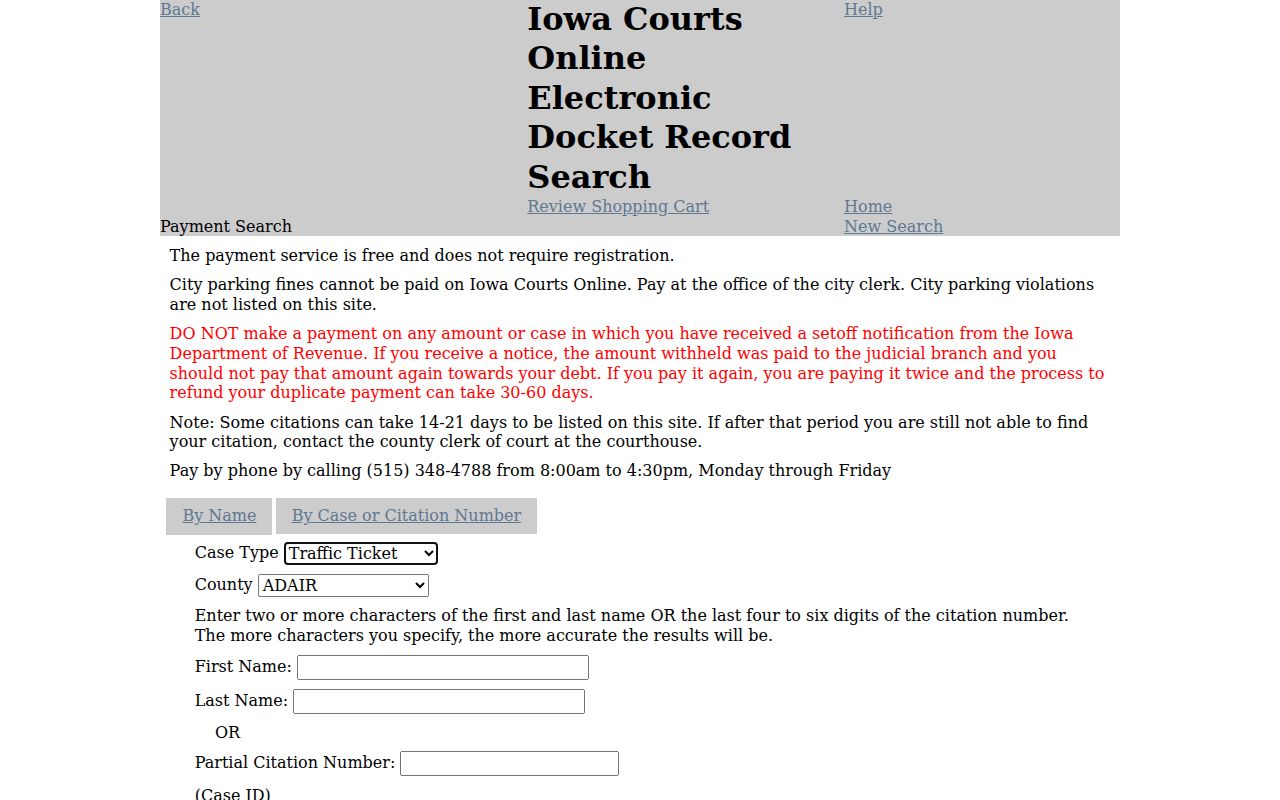
Keep proof once a valid payment posts. Court and agency systems do not always update at the same moment. Ask the Plymouth County clerk when the case history and any related warrant order will reflect the change.
How Traffic Warrants Trigger License Holds
One Plymouth County citation can lead in different directions. A fine is one thing. A license can be another. Iowa DOT says nonpayment of a fine, penalty, surcharge, or court costs can suspend a license, though payment plans and reinstatement routes may apply and the clerk reports payment. A suspension is not an arrest warrant, and neither is a private driving-history report.
| Record or Action | Trigger | What It Means |
|---|---|---|
| Traffic case | Citation filed in court | The public docket tracks court events, payment, and disposition. |
| FTA arrest warrant | Willful failure to appear after citation | A court order authorizes arrest and is routed for enforcement. |
| License suspension | Reported nonpayment of court debt | A separate DOT consequence with payment and reinstatement steps. |
| Restricted IOWA System entry | Criminal-justice agency record | Authorized users may access it; the public cannot search this system. |
The Iowa DOT nonpayment page spells out the suspension path. Ask the court about the Plymouth County warrant and the DOT about license reinstatement, since neither office's record replaces the other.
Plymouth County Warrant Scam Check
An unexpected traffic-warrant demand deserves a pause. Real court and law-enforcement staff do not collect gift cards, cryptocurrency, wire transfers, or immediate payment through an unsolicited number. The Iowa Judicial Branch scam warning spells this out. Hang up. Do not call the number the caller gives you. Look up the Plymouth clerk, the court, Le Mars Police, or the sheriff on an official website yourself. Give that office the citation or case number. Never hand over bank details or payment codes. Asking whether the case exists, what the docket shows, and which approved payment method applies keeps a real Plymouth County traffic warrant issue apart from a false demand.